Mars & Multiplanetary Future
Elon Musk's defining mission: make humanity a multiplanetary species — not as a scientific curiosity, but as a survival strategy for consciousness.
What's New (March 2026)
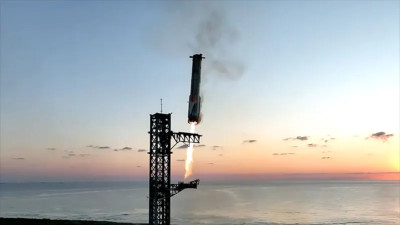
Starship Flight 8 successfully caught the Super Heavy booster with the Mechazilla tower arms. SpaceX continues rapid iteration with multiple test flights planned throughout 2026. Uncrewed Mars missions are targeted for the late 2020s, with crewed missions expected in the early 2030s.
The Core Vision
Elon believes that keeping all of humanity on a single planet is an existential risk. A large asteroid impact, supervolcano, nuclear war, or engineered pandemic could wipe out civilization if Earth remains our only home. His solution is to establish a self-sustaining colony on Mars — large enough and capable enough to survive independently even if something catastrophic happened to Earth.
He has repeatedly stated the goal is to see a million people living and working on Mars. This is not a research outpost or tourism destination — it is intended to become a second branch of human civilization.
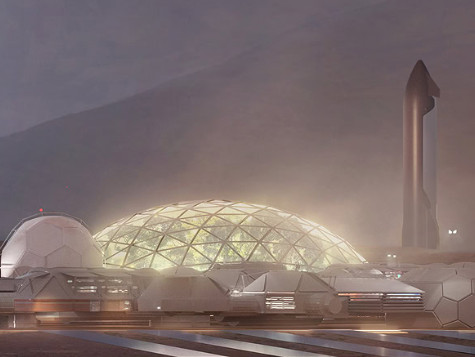
Official SpaceX concept of a Starship landing on Mars — click image for site access
The Plan & Milestones
SpaceX’s roadmap uses the Moon as a critical proving ground while developing the technology needed for Mars. Starship serves as NASA’s Human Landing System (HLS) for the Artemis program, while also enabling independent Mars missions.
NASA Artemis II: Crewed lunar flyby using SLS + Orion (not Starship).
Source: NASA Artemis II
Artemis III demonstration: Crewed rendezvous and docking in low Earth orbit with Starship HLS prototype(s) for testing navigation, life support, and operations.
Source: NASA Artemis III and SpaceX Starship
Artemis IV target: First crewed lunar landing using Starship as the Human Landing System — astronauts descend from lunar orbit to the Moon’s surface.
Source: NASA Artemis IV
Continued lunar missions (Artemis V and beyond) using Starship HLS for sustained presence near the lunar south pole.
Source: SpaceX Starship updates and Elon Musk statements on X

Starship launching from Starbase, Texas — the vehicle that will enable both Moon landings and Mars missions
Reusability in Action
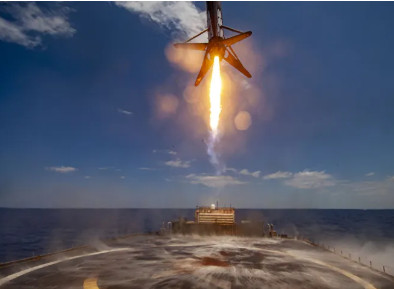
Reusability is the foundation that makes Mars affordable. SpaceX has already perfected Falcon 9 booster landings, including dramatic drone ship landings at sea, and is now perfecting the tower catch with Starship.
Watch Falcon 9 Drone Ship Landing:
Watch Starship Super Heavy booster successfully caught by the Mechazilla tower arms:
Current Status (March 2026)
Starship has completed multiple successful high-altitude and orbital test flights. The most recent major milestone was the successful catch of the Super Heavy booster using the tower’s “Mechazilla” arms. Heat shield performance, in-orbit refueling, and ship reusability remain the primary technical challenges. SpaceX continues aggressive iteration with frequent test flights.
Key Terms
- Multiplanetary Species
- Humanity living on more than one planet so that a single catastrophe on Earth cannot end civilization.
- Starship
- SpaceX’s fully reusable spacecraft and Super Heavy booster — the most powerful rocket system ever built.
- Full Reusability
- Both the booster and ship return to Earth, are caught/refueled, and fly again — dramatically lowering cost.
- In-Orbit Refueling
- Transferring propellant between multiple Starships in space so a single ship can reach the Moon or Mars.
- Self-Sustaining Colony
- A settlement on Mars that can grow food, produce energy, manufacture tools, and survive without constant shipments from Earth.
Sources & Further Reading
• SpaceX Starship: spacex.com/vehicles/starship
• NASA Artemis II: nasa.gov/mission/artemis-ii
• NASA Artemis III: nasa.gov/mission/artemis-iii
• NASA Artemis IV: nasa.gov/mission/artemis-iv
• Elon Musk updates: @elonmusk
• SpaceX YouTube channel for live test flight coverage